Spending a Message


Tesla, Target, Disney, Home Depot, Chick-fil-A, Hobby Lobby, Starbucks. The list of companies actively affronting our values feels endless, and it seems a new provocation happens every day!
Which decisions will shape your purchases this holiday season?
Will you shop at local or online indie bookstores instead of Amazon? Enjoy your latte at a small neighborhood coffee shop? Support Costco instead of Target or Walmart? Host your holiday party at an immigrant-owned restaurant instead of a chain?
Hitting companies where it hurts — in their profits — can be a powerful activist tool. But boycotting can be complicated.
How do you decide if you’ll boycott? Does it depend on how egregious the corporate behavior, how difficult it is to replace the company or brand, price, or an ever-shifting combination?
On the flip side, do you support companies or products because they have demonstrated allyship?
How do you apply your ethics to your economics?
This was such a hot topic in our Indivisible Chicago Northwest Side (ICNW) Signal chat that a new subgroup, Conscious Consumerism, emerged and has 100-plus members.
Do boycotts work? Withholding our dollars in protest or spending in support can be a powerful way to send a political message. But it can also be overwhelming and frustrating. With new boycotts popping up all the time, and few that are truly successful, we may wonder: Do they even work?
Sometimes.
Historically, focused and sustained boycotts have driven change. The 1955-56 Montgomery bus boycott forced the city to end bus segregation. The 1960s grape boycott improved labor contracts for farmworkers. And, of course, the Boston Tea Party, a splashy protest against corporate tax breaks and tea monopoly, was a factor leading to the Revolutionary War.
Today? More than 1.7 million customers joined a 2025 Disney boycott when talk show host Jimmy Kimmel was threatened with censorship. Kimmel returned to the airwaves just six days after his suspension.
BDS (boycott, divest and sanctions) protests and boycotts convinced Puma to end its long-term support of the Israeli Football Association.
But it’s complicated. Some boycotts are more complex — they achieve some results but not the intended goal. For instance, in response to the Target boycott, stock prices fell 33% at one point, and the company lost $20 billion in market value, yet it did not reinstate the DEI policies that activists demanded. And Target’s stock is back up this year — a rebound from the most brutal days of the boycott.
Some corporations own many brands, so it becomes more difficult to leverage our dollars to drive change. For instance, if you boycott Nestlé, are you also willing to leave DiGiorno, Tombstone Pizza, Hot Pockets, Stouffer's and Gerber?
People from marginalized groups often depend on these companies too, so withholding our dollars can get messy. Tabitha Brown, a Black vegan influencer, was proud to finally land a merchandise line at Target. Boycotting Target because of its DEI stance hurt this Black-owned brand. When we boycott huge retailers, we harm the company, but also small sellers including BIPOC and LGBTQ+ merchants whose livelihood depends on these companies’ tremendous reach. Choosing to work only for ethical companies is a privilege. Corporations with unsavory practices employ thousands who can’t necessarily afford to be picky about where they work.
Keys to a successful boycott
According to PBS, four elements are key to a successful boycott:
- Clear goal: The intended outcome should be as specific as possible.
- Mass mobilization of awareness and education: People need to know it’s happening and how to get involved.
- Continuity: Don’t give up, even when it becomes difficult.
- Targeted economic impact: Focus on where to boycott to leverage the greatest effect.
How are your neighbors deciding the most effective way to use their dollars to drive change? To find out, we talked to ICNW members Alicia, Elijah, Stephanie, Kim and Spike.
For many, Donald Trump’s presidencies spurred first-time boycotts. Kim, an Irving Park resident, said: “Before his presidency, I had been focused on finishing school, finding a job, changing careers. But this second term has been horrific. You can’t not do something.” Others have been voting with their dollars for longer. Alicia, who lives in Belmont-Cragin, has always tried to support local small businesses, particularly those owned by women and minorities. She does so even more now. And Elijah, another Northwest Side neighbor, has not only boycotted companies like Nestlé and Jimmy Johns, but he’s also spoken out about them to help raise awareness.
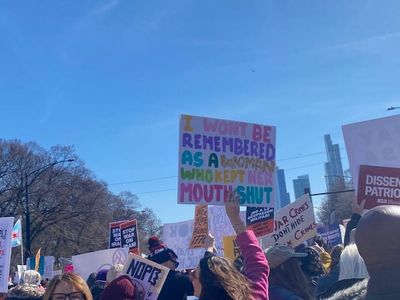
How do we decide whether to boycott? What factors do we consider? For some neighbors, the offense is the most important criterion in deciding whether to boycott. Alicia said: “Anyone supporting ICE is at the top of my boycott list. I try to avoid spending with companies that support MAGA, but it’s hard to be consistent. Small companies are bought by bigger ones and then sold again. It’s hard to follow the money.” She added that “affordability is a big factor in my decision-making — I may never be able to completely boycott Amazon, but I do my best.”
For Stephanie, “it’s about making the best choice with the information we have. It’s not perfect. The power of my spending can make a difference. Our money should support our values, but convenience is baked into the way we live. I’m making the best choices I can, and it’s important that we not shame other people for not being perfect in this.”
Do we return to a company once it has changed course? Most of the neighbors we talked to will stop boycotting if the company has reversed a bad decision or behavior. Stephanie will return, but only if it seems the company truly has had a change of heart, not a temporary pivot to drive profits. But there are exceptions. “If Target were to reinstate DEI now, I would not return to shop there — too much time has passed,” Spike said. “The message is clear: They only care about a certain demographic.”
What about holiday shopping? Kim said: “I used to holiday-shop on Amazon, but I won’t buy there anymore. I’m going to find local shops and businesses instead.” Elijah feels the same way. “I’m staying away from big corporations as much as possible. I’ll continue my boycotts throughout the holiday season.” Spike concurred.
“Sure, it would be easier to skip the boycott and walk into Target to get all my shopping done in one trip, but we wouldn’t feel right about it. We plan to shop from local, independent sellers and artists. The gifts are more meaningful when we shop with intention and take the time to make selections with our values and those of our friends and family in mind.”
Tools for conscious consumers
Most of the people we interviewed relied on word of mouth from respected friends, trusted social media thought-leaders and independent journalists to stay updated on where companies stand on important issues. A few relied on websites or apps such as Goods Unite Us, Progressive Shopper, WalletVote, and Buycott.
We learned a lot talking to our five neighbors and would love to hear from you too! Complete this three-minute questionnaire, and we’ll publish results!
Subscribe to our newsletter.
Be the first to know - subscribe today