Schooling ICE

Remember last fall when we naively thought ICE might spare places like schools and hospitals during Operation Midway Blitz? We underestimated how truly ruthless they are.
Remember last fall when ICE naively thought their swagger, intimidation and law enforcement costumes could scare a city into submission? They underestimated how truly tough and caring Chicagoans are. We rise up to take care of each other.
The 2025-26 academic year is finally drawing to a close. It’s been a school year unlike any other and hopefully one we’ll never experience again.
Unity in Community
Candace has two children who attend a Northwest Side elementary school. (That is not her real name. We are keeping her identity confidential and omitting the name of the school due to the dangers posed by ICE.) She recalls how, at the start of the school year, her neighbors anticipated what was coming.
“When Homeland Security told us they were coming to Chicago, no one knew quite what would happen, but we saw (what happened in) LA and D.C. and figured it would be similar. We tried to learn from them.”
In Candace’s neighborhood, people know each other. Even before the ICE raids, there already were the beginnings of an organized community. That proved crucial. She and her neighbors were able to hit the ground running when crisis came.
“We had built relationships among parents and kids, through our neighborhood’s independent political organization. Lots of door knocking over the years, so we already knew one another, at least a little, and had a way to connect with each other,” Candace said.
Based on what other cities had experienced, a handful of neighbors brainstormed how they might reduce risk if people became afraid to leave their homes. Before Labor Day weekend, they started a Signal chat so they would be ready to communicate at the first sign of federal detentions.
“We are proudly a community of immigrants,” Candace said, “and we knew people would be vulnerable. We wanted to make sure we could take care of our neighbors, particularly children.” She reached out to neighbors and told them that friends were available to walk their children to school if they felt unsafe — and asked them to spread the word.
Parental Patrols
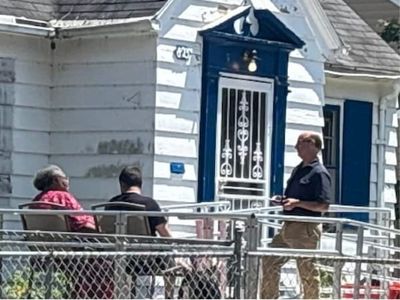
At first, following rapid response training, concerned neighbors conducted safety walks, mainly before and after school. “We were looking for suspicious cars, but even more, we wanted a baseline understanding of what a normal day looked like. We saw the patterns — the same trucks, pedestrians, deliveries — from day to day. This made it easier for us to notice when something was off,” Candace said.
One morning, as Candace was headed out the door to school, her phone rang. “A neighbor called,” she said. “I could hear her daughter sobbing, terrified her mother would be abducted, refusing to go to school. Her mother asked if I could walk her, said the girl might be willing to go if someone else took her. A neighbor was there within five minutes.”
Fast-Acting Compassion
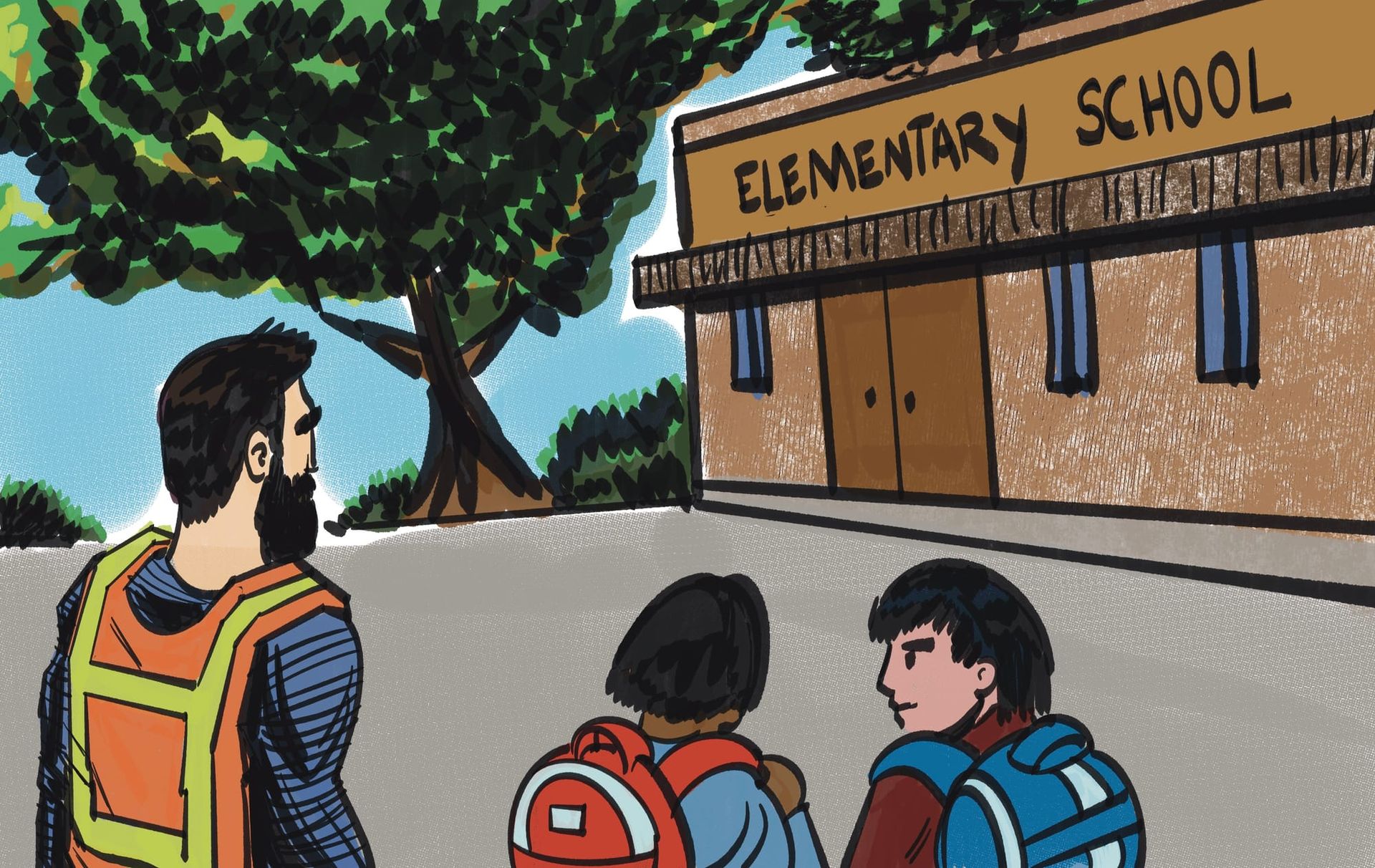
They didn’t know it then, but that morning marked the beginning of their “walking school bus” — like a regular school bus with an assigned route that makes stops to pick up or drop off kids.
A few weeks later, a neighborhood parent was detained by ICE after dropping kids off at school. “That shifted everything into high gear,” Candace recalled. “People were afraid to pick their kids up when school let out. The principal knew about our group of volunteers and called to ask if we could help.
Within two hours, 15 neighbors showed up and helped walk all the children home. The following school day, nearly 100 kids stayed home. Our walking school bus rapidly grew from a casual group of half dozen or so students to 100.”
Around the same time, elected officials including Illinois State Senator Graciela Guzmán and 33rd Ward Alder Rossana Rodríguez Sánchez shared signups for volunteers to patrol corners near schools all across the Northwest Side, particularly in neighborhoods with large Spanish-speaking and immigrant populations.
“Between their efforts and word of mouth,” Candace said, “our walking school bus grew to more than 100 people willing to help!” This was quite an operation. “We had separate routes, two adults for every route, with as many as 10 students per route. We had dispatchers. We navigated a maze of afterschool programs and pickup and drop-off times. We had to fill 50 volunteer slots every day for months.”
After the Storm
Finally, around Thanksgiving, Border Patrol Cmdr. Greg Bovino and many of his agents left Chicago. The walking school bus continued for a few weeks, but after winter break, Candace’s neighbors started to feel more comfortable taking their children to school, and the community rolled back to corner patrols.
During the two-month onslaught in the Chicago area, it is estimated that ICE and Border Patrol detained 3,800 people and deported 2,500, most of whom had no criminal record. Five parents from Candace’s school were separated from their children.
Resistance Starts with Knowing Your Neighbors
Looking back, Candace echoes the opinions of many of the parents involved. “It was a scary, awful time, and yet despite the atrocities, kids will still be kids — they would cartwheel down the street, show off their new mittens. It was such a treat to be able to laugh for a moment. We developed such close relationships with families we may have only known by name and face before.”
When asked what made their school support so effective, Candace is emphatic. “A strong community! It’s block parties and soccer during good times — it’s life support when things get bad. Having each other’s contact information, knowing who we could turn to, made it so much easier to be ready to protect one another.”
Her advice is simple: “Really take the time to get to know your neighbors.”
And their work continues. “ICE is already back. Looks like they are hitting the airports and courts this time,” Candace said. “We are prepared.”
In the meantime, Candace’s neighbors continue to show up for each other — raising money for families trying to pay ICE-related legal and mental health fees, sharing childcare, helping with groceries, buying diapers when money is tight.
“That’s what neighbors do for each other,” she said. “That’s what community means.”
Amplify Immigration Resources
Hear more neighborhood stories of resistance, enjoy a restorative walk in the woods and take part in a fun scavenger hunt. Come to ICNW's family-friendly Forest Preserve Picnic at Bunker Hill June 7. Details and registration HERE
Subscribe to our newsletter.
Be the first to know - subscribe today