
The Birth of a Protest Song: A Conversation with Joel from Tinvis

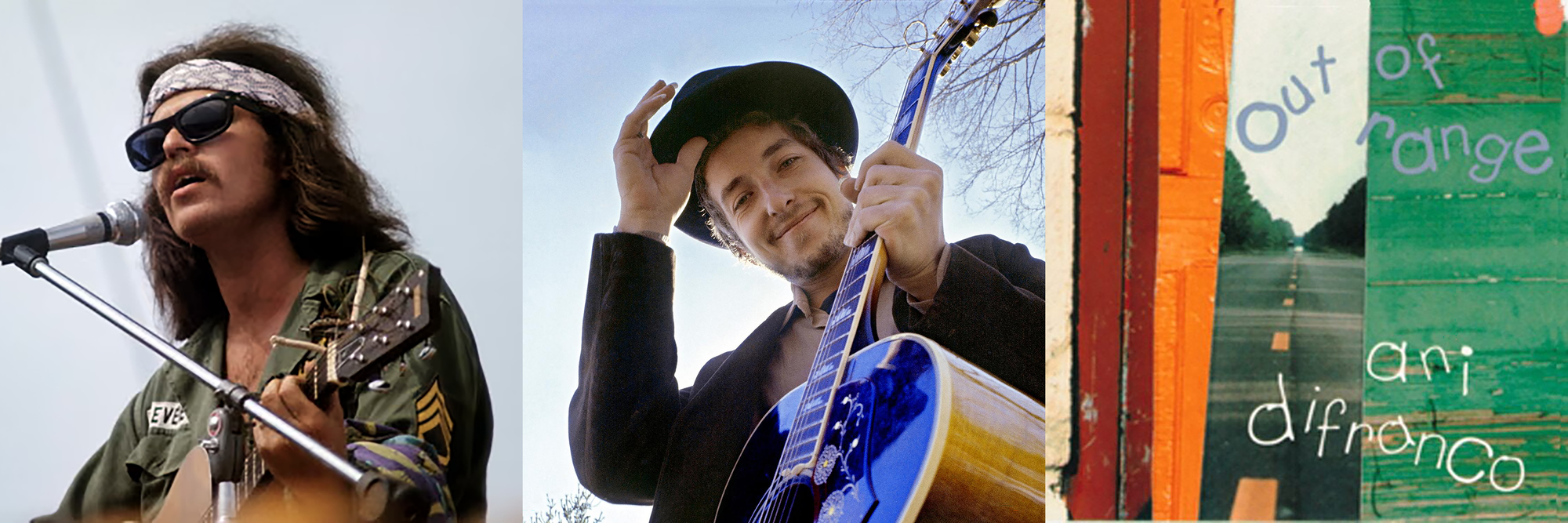
Joel began to understand the potential of protest songs when he was only 4 years old. “My mom had the three-LP Woodstock set from the concert,” Joel said, “and we would listen sometimes. Country Joe McDonald, of course, had his famous F-U-C-K cheer, in the song about Vietnam. I could hear the anger in Country Joe's voice and the emotion in the delivery of it. So I think I started to connect that you could have this upsetness in music.”
In high school, he started listening more closely to Bob Dylan. This was during the development of the movie “Hurricane,” based on Dylan’s song about the falsely imprisoned boxer Rubin "Hurricane" Carter. The song, written in 1976 during a retrial of Carter, infused the issue of his innocence into the news, and helped generate the outcry that ultimately led to his release. Ani DiFranco was a strong influence as well, in the late 1990s. “I think I learned about the power of words from her. She was in the press all the time then. There was a lot of anger and a lot of things to be angry about – and she started so incredibly young. I think she put out her first record at 19. I thought, ‘My God, how does somebody around my age do this?’”
Joel recalls writing his own first protest song around 2002 about George W. Bush’s invasion of Iraq. “It was like, I can't write a pop song right now. If I'm going to sit down with my guitar, this is the only thing I could write.”
In the last decade, Joel has made protest songs a larger part of his practice. One of his most recent is titled “Morgan Wallen,” and has generated a lot of attention on YouTube.
The Indivisible Chicago Northwest (ICNW) chapter was a key catalyst for the tune. In April 2025, only a couple of months after the chapter was founded, ICNW held a town hall at the Logan Square Arts Center. Hannah, one of the founders of Amplify, invited him to come. It was near his house, so he walked over. “It was very powerful,” Joel explained. “There were hundreds of people there to listen to the speakers. One of the things Kevin, the leader of the chapter, said was, ‘At every point in history, if you can get 3% of the population to engage in protest – out marching on the streets, active – you can inspire social change. This is true in cultures around the world. You see it over and over.’” This was before the first No Kings rally. “Kevin said, ‘If every person that was involved, you people here included, brought two people to the next protest, we'd be at 3%.’ And I thought, that's so actionable. It's a very powerful thing.”
People at the gathering started asking questions, one of them about ICE. This was prior to ICE’s invasion of Chicago, but its impact was already becoming clear. “What I started to think of on the walk home,” Joel said, “is what if this keeps going to its logical end, and the administration just takes everybody away? And what if Kid Rock – I don't know why I went there – what if there's no one left to go to Kid Rock's shitty bar in Nashville, which I'd been to? I considered the famous Niemöller quote: First they came for the socialists, then they came for the Jews, then they came for whatever, and then they came for me and nobody said anything. I thought about that in this context of why it's important for us to be involved and be more active, and I decided I wanted to be more active that night.”
By the time he got home, Joel had written the ending to the song. “What if no one says or does anything? Then they will come even for the people who don't think they would ever come for them. And of course, I thought, well, that would probably be the people who would go to Kid Rock's bar. But Kid Rock doesn't really rhyme well or sing well. So I thought, who else could be that person? And Morgan Wallen was who I arrived at.”
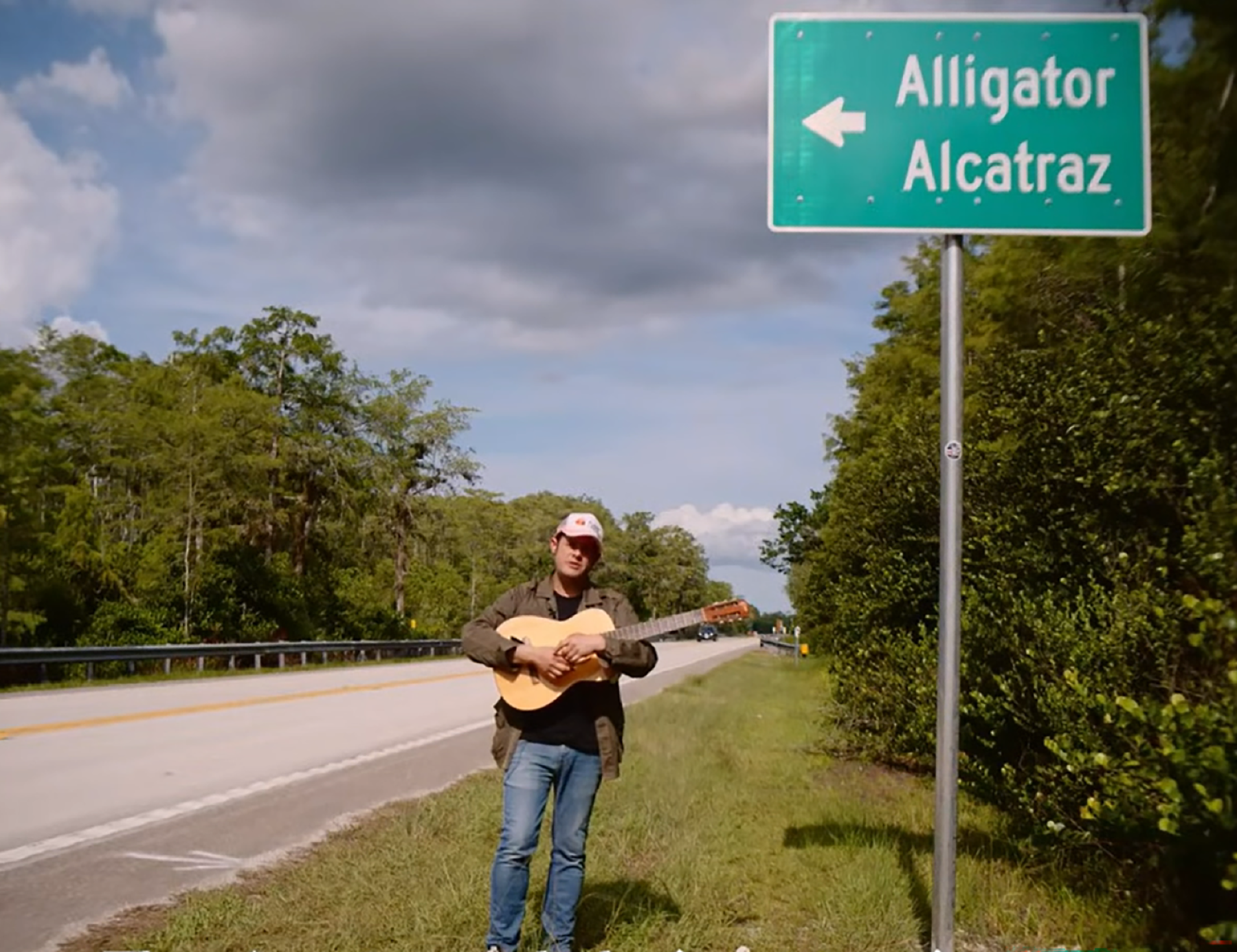
The video was another story altogether. “The medium of songwriting inherently requires a listener,” Joel continued. “It just does. So even one person, I think that's enough.” He wasn’t performing much at that point, so he wondered what visual imagery could be incorporated to amplify the song’s message. “I started to see the articles about Alligator Alcatraz,” Joel said, “and I thought, nah, it's a joke. But it wasn't a joke. I looked it up, and there were the pictures and the signs, and I thought, what if I just went and did it there?”
He called a friend who had recently filmed a project with him in Santa Fe.
They both flew in separately. “Within two hours, maybe three tops, we had driven out to Alligator Alcatraz. There were signs on the way in, maybe three or four signs saying, “Alligator Alcatraz this way”. But as you drive up to the entrance, you could see they'd put up these huge fences. And there were police cars staggered back because they're trying to protect the place. So I'm sure people knew that I was there.”
“We drove past the facility – it used to be an airport – flipped around and set up a camera. My buddy held up a remote boom mic, and I played the song maybe eight times because we kept getting honked at. At one point, Monty, the videographer asked, ‘Do you think those are friendly honks or not-friendly honks?’ And I said, ‘You know, I don't think they're friendly honks.’ It was very scary.”
The video has garnered a good deal of attention, both positive and negative, drawing more comments than anything he’s been involved in. It made some people angry. “It's the first time I've ever gotten negative comments about anything music-related – which doesn’t mean people weren’t thinking it!” Joel added. “Some people didn't get it; a lot of people did. I'm sure my name is on a list somewhere. This does make me feel a little more vulnerable as a consequence.”
“But putting that aside,” Joel added, “I've now met people in Chicago who have been brutalized by ICE, had bones in their faces literally broken, their teeth chipped, been hit in the head or the body with rubber bullets. We've all seen the images. People are dead now all over the country. So, I'm not saying this song has done nothing. Certainly, it's just a drop in the bucket. But maybe enough songs can mean something? And I think it's better to have done something than not done anything."
Subscribe to our newsletter.
Be the first to know - subscribe today