
Our Ailing VA


The U.S. Department of Veterans Affairs (VA) is America’s largest integrated health care system. It is the place to go for medical care for many vets who do not otherwise have coverage. It provides disability compensation, education and training, careers and employment assistance, support for burial and memorials and a lot more.
Well, it used to.
“When you fire the people who staff the veteran crisis line which provides 24/7 support, claims managers who help vets navigate their insurance, benefits counselors, medical assistants and more, the results are devastating,” says "Chelsea," a VA staffer who lives in Chicago’s Avondale neighborhood.
Like many federal employees, Chelsea fears for her job and other reprisals so we’ve agreed to keep her identity anonymous and have changed a few identifying details.
Chelsea and her colleagues are experiencing firsthand the gap between Trump’s campaign promises to protect our nation’s heroes and what is happening to the agency after deep DOGE cuts and policy changes: from chaotic and abusive workplaces to threats aimed at life-saving scientific research and medical care.
Accurate statistics are increasingly difficult to pin down, but after the first round of layoffs in Spring 2025, more than 2,400 VA staff had been fired, and DOGE announced plans to terminate as many as 80,000 more over the course of the year, for a total staff reduction of 15%. In July, the original plan was walked back, reducing the number of cuts to “only” 30,000.
Harming the Helpers
A mental health care provider, Chelsea has been at the VA for nearly 10 years. She feels she was called to work with marginalized communities to ensure veterans were receiving the care they deserved and were entitled to.
She sees clients individually and in groups, most are men of color. Many are immigrants. Some experience sustained or temporary homelessness.
She recalls with exasperation the first few months of the new administration. “It got really bad really fast. Within days of the inauguration, a spate of executive orders started coming out and didn’t stop. People were asked to retire but positions weren’t filled. We’d get emails from sources we didn’t recognize saying one thing and then a few days later, a completely different directive came from a completely different source. We struggled to figure out how to shuffle duties.
"I would have to tell people whose mental health was already fragile that I wasn’t sure if I would be here the next time they came in–that I wanted to be, but it was out of my control. We were, and continue to be, belittled and bullied on the job, day in and day out.”
Weaponizing Care to our Nation’s Veterans
With 1,300-plus facilities, serving more than 9 million veterans and their families each year, the VA has roots in caring for disabled Union veterans of the Civil War and expanded after both WWI and WWII. Chelsea describes what she sees happening to an institution that is designed to help those who served.
“The cuts we are witnessing are most greatly impacting those who served their country and already are living on society’s edges.
“For example, we have a medical companionship program so veterans don’t have to go to appointments alone for medical procedures. Now, there’s no one showing up to assist them because they’ve been let go,” Chelsea says.
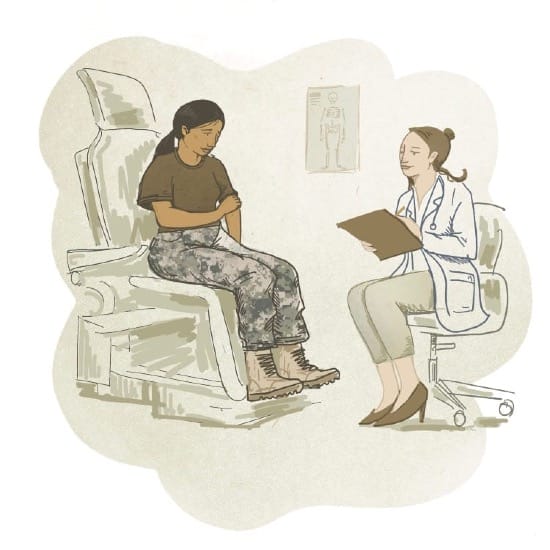
She worries too about the impact beyond the daily care. VA research funds are being cut that cover studies on an array of health issues: suicide prevention, substance use disorder, burn pit and agent orange exposure, and more.
Another impact that most people might not know: The military is the nation’s largest employer of trans people. “Some individuals are willing to risk their lives to enter military service simply to get the care they need,” she says. “But now that is gone. Unless patients have already begun gender-affirming care, it is no longer approved.”
From Bad to Worse
Since the first time we spoke with Chelsea in the spring, things have gotten even worse for veterans and VA staff. At that point, 377,000 of 483,000 VA employees had been represented by unions. Unlike the private sector, government employees cannot negotiate wages or strike. Collective bargaining enables them to negotiate factors like working conditions, parental leave and how overtime is managed.
Even though union members vote Republican and Democrat, this administration has demonstrated worker rights simply aren’t a priority. In August, it terminated contracts with federal employee unions for nine agencies including the VA–stripping them of their collective bargaining rights.
“Federal workers have fought for decades for union representation, which we finally earned in the 1960s,” Chelsea says. “In just a few months, the administration stole this hard-earned right.”
VA employees live in fear of their duties increasing and pay decreasing. Recently, the performance standards for staff at the VA changed retroactively to deter employees from receiving the highest rating–their only chance at a “bonus” throughout the year. The number of “outstandings,” the highest rating, has been capped.
And after the federal government shut down October 1, Department of Labor data reveal some 26,000 more furloughed federal workers filed for unemployment compensation. “I work with veterans who are employees at other federal agencies who have been furloughed without pay,” says Chelsea. “Air traffic controllers, TSAs, hard-working people who are showing up day after day without pay, afraid to take any time off.
“I can’t overstate how much this president has harmed veterans and the VA’s ability to adequately meet their needs.”
“There’s a lot of talk at the federal level about what the administration is doing or plans to do for veterans, but very little positive action,” Chelsea says. “I hope people will be inspired to do what they can to help.”
RESOURCES
Veterans
- Hire Heroes USA: helps veterans, transitioning service members and military spouses secure meaningful employment
- American Bar Association's Military Pro Bono Project: legal services for veterans and their families
- Mayor's Office on Veterans Affairs (Chicago): information on resources, recreational activities, federal benefits, veteran hiring preferences and veteran-owned businesses
- Illinois Attorney General's Military and Veterans' Rights Bureau: resources on state and federal benefits, consumer protection, dealing with trauma and legal assistance
- National Veterans Art Museum (Portage Park): free museum created by veteran artists and volunteers that also provides paid fellowships to veteran artists who want to build a shared sense of purpose and connectedness between veterans and the public.
Federal Workers
- American Federation of Government Employees: FAQs about the shutdown
- Senator Tammy Duckworth, Resources for Federal Workers: Know your rights as a federal worker, file a complaint, healthcare and unemployment resources, and more.
- More federal worker resources here in Amplify
READ MORE
Meet a U.S. Marine vet feeling the impact of Trump administration policies.
GET INVOLVED!
More opportunities to support our local veterans and the workers at the U.S. Department of Veterans Affairs will be posted soon!
Subscribe to our newsletter.
Be the first to know - subscribe today