A Critical Lifeline Gone in a SNAP


What becomes quickly clear in separate conversations with three women on the Northwest Side living with food insecurity, is how quickly the Republican changes to the Supplemental Nutrition Assistance Program (SNAP) have left families scrambling.
SNAP helps more than 42 million people buy food each month: One in eight Americans. Seventy percent of those participants are the elderly, disabled or children. Some are your neighbors. All three women we spoke with were uncomfortable using their real names, so we've used pseudonyms. Other minor identifying details have been changed as well.
Marie is in her 50s. She lives in Mayfair with her 30-year-old son who has autism and a heart condition. The two survive on her son’s $992 monthly Social Security check and her SNAP benefits, which have covered roughly 70% of their food costs. Still, Marie usually falls about $80 short every month. For someone scraping by, this shortfall could mean asking neighbors to share food, stretching meals with cheaper ingredients like rice, or paying only part of a utility bill.
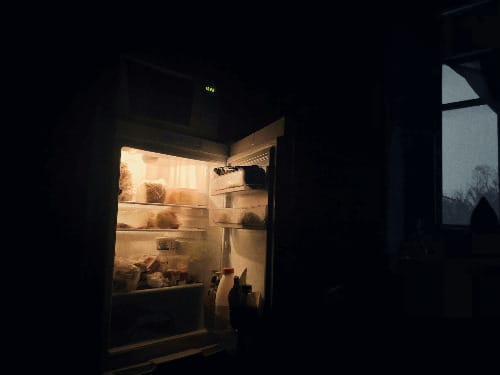
In July, the Republican Congress passed the "One Big Beautiful Bill" Act, and when President Trump signed it, the federal government reduced the amount of the SNAP program’s benefits by $186 billion nationally over ten years.
In the fall, Marie’s SNAP payments suddenly began to drop. Instead of her usual $577, she received $498, and new restrictions meant she could no longer purchase prepared foods her son enjoys—lemon ice tea mix, fried chicken from the grocery.
Shutdown, Shut Out
In November, during the government shutdown, Marie’s benefits disappeared altogether. Trump’s USDA decided not to use available SNAP contingency funds for November benefits, arguing the funds were for supplementing, not replacing, assistance. That meant major benefit cuts, often to zero, for millions of families.
“We didn’t know if we were going to get anything at all,” Marie said. “My son was in the hospital that month, and this is awful to say, but at least he was getting food there. I wasn’t sure if I’d be able to feed us both.”
Her benefits resumed in December but were reduced again, to $439.
Anita, 55, lives in Hermosa with her two children. Until recently, she worked as a nanny, earning $18 an hour. But when she was injured, she needed time off to heal—and her employer let her go.
Because she is an immigrant without citizenship, she is not eligible for SNAP herself, but her high-school-aged son, who has citizenship, is. His $290 monthly benefit typically covers a third of the food the family needs.
“We are barely scraping by and can only just meet our expenses most months. My landlord is patient and has let us pay our rent late. My kids can sometimes do odd jobs to earn money,” Anita said.
In November, their SNAP benefits didn’t arrive. The shutdown delayed payments for weeks. “Eventually we got $100, then the rest later. But the whole time, I was worried we wouldn’t get anything.”
Restrictions and Rules
The One Big Beautiful Bill Act also creates a lot more hurdles for recipients to access funds. Similar to Medicaid eligibility, people ages 18 to 64 must work or volunteer a minimum of 80 hours per month or participate in specific trainings to receive SNAP benefits. While the Medicaid changes won't come online until 2027, SNAP updates went into effect in October 2025.
For SNAP, caregiver exemptions to these requirements only apply if the child is disabled or under 14 years old (previously it had been 18). Exemptions for veterans, people experiencing homelessness and former foster youth under age 24 have been stripped, and adults aged 55 to 64 are now subject to SNAP work rules.
Marie worries about changes to the work requirement. “I'm praying that it works out for us. My son can't take care of himself. If they decide I should be working, I'll lose my SNAP. And if we get cut from SNAP, we'll also lose our Medicaid, because it's the same work requirement.”
Anita, too, is frightened of the new work rules. Although only her son is technically the SNAP recipient, household income and employment are taken into account.
“I don’t have a steady full-time job all the time like some people do, so I’m worried we may lose SNAP and Medicaid for my son,” Anita said.
Like roughly 85% of older adults who receive SNAP benefits, Mayfair resident Barbara lives alone. She used to receive $600 a month in Social Security and, until recently, about $292 in SNAP. That plummeted in November, without warning, to just $16. After the shutdown, it rose slightly to $94, still far below what she previously received. When we spoke with Barbara, she hadn’t received December’s benefits yet. But she was told it would continue to only be $94.
Barbara believes that because of the tariffs, food is much more expensive than it used to be. Her dollars can only be stretched so far. “My sons help me when they can, but they’re cash-strapped too,” she said. “Hopefully I’ll be okay, but you never know.”
Aiming to Fill the Gap
Marie, Anita and Barbara are all food insecure because of decisions made at the highest level of government. Another experience they share: When things get very hard, their Northwest Side community steps up.
Mutual aid societies offer a bag of groceries each week, and food pantries do their best to fill in the gaps. Landlords sometimes offer a break with the timing or the amount of the rent.
Barbara says she relies heavily on a monthly box from a food pantry and a weekly bag from a mutual aid group to get by. Because they usually provide fruits and vegetables and shelf-stable items like pasta and rice, she can use her SNAP funds for coffee, meat and eggs.
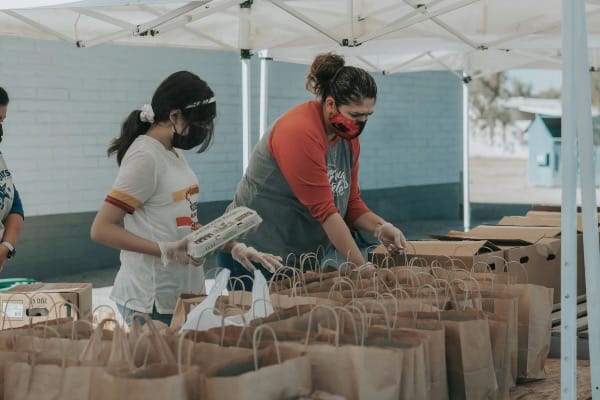
Without a car, getting to food pantries is difficult for Anita. A mutual aid organization brings her a bag of groceries every week, which she calls “a lifeline.” During the shutdown, she says her family stretched their dollars and received gift cards from a neighborhood group that was raising funds for people impacted by SNAP cuts.
The federal government is willing to let people go hungry. Sometimes, putting food on the table depends on neighbors just sharing a few dollars. “If ever I have extra food or money, I share with them,” Marie said. “They do the same for me.”
The One Big Beautiful Bill Act cuts nearly $200 billion dollars from the SNAP program over the next decade, not to mention major reductions to health insurance subsidies, Medicaid and more. At the same time, it provides $4.5 trillion in tax cuts to the wealthy. According to the Center for American Progress, this is the largest transfer of wealth from the poor to the rich in a single law in U.S. history.
The priorities of the current administration couldn’t be more clear.
You have the power to make a difference. Here are a few ways to help.
RESOURCES
- Check out this directory of free food and other mutual aid resources and get involved!
- Donate to a food pantry near you, including Common Pantry featured in our related SNAP story, Feeding our Neighbors.
- Join or donate to Chicago Food Sovereignty Coalition, a volunteer-driven group working to create a better food system, by linking mutual aid groups, organizations, businesses and individuals.
- Love Fridges are like Free Little Libraries, but for perishable food. Some have freezers, too. Everyone is welcome to take or leave food. If you are donating, please label what your contribution is and the date you are leaving it. Food portioned into individual sizes is always appreciated as are napkins and cutlery. Find the Love Fridge nearest to you.
- Get involved in mutual aid efforts in your own neighborhood. Here are just a few Northwest Side resources. If you don't see yours, complete this form and you'll be directed to the one closest to you.
- Albany Park Mutual Aid
- Avondale Mutual Aid
- Humboldt Park Solidarity Network
- Irving Park Mutual Aid
- Logan Square Mutual Aid
- Mayfair Mutual Aid
- Portage Park Mutual Aid
- West Town Mutual Aid
Read More Stories by Amplify on Food Security
- Feeding Our Neighbors - A Common Pantry staffer shares her first-hand perspectives on Chicago's food crisis.
LEARN AND GET INVOLVED
We're researching and compiling more local resources and opportunities to help - if you have any to share, please reach out to storytelling@indivisiblechicagonw.org.
Subscribe to our newsletter.
Be the first to know - subscribe today